


You will be missed, but your words will live forever — a beacon for future generations.
“Eating is an agricultural act.” — Wendell Berry.
All movements, political, social, or economic, stand on the shoulders of giants. Those who came before us and helped see the world a little more clearly — those who help lead us and see further than the current status quo would have us believe.
Nowhere is that truer than in the food, farming, and agricultural reform movement that seeks to protect America’s farmers, our soil, and our environment from the rapacious attacks of relentless greed that have been inflicted on rural America and our natural resources.
The news of Wendell Berry’s death was not unexpected; he was 92 and had lived a good life (1934–2026), bringing the wisdom of his rural roots from a small farm in Kentucky to the broader world. As a young writer, he could have been seduced by the bright lights of the big city. Still, he chose to return home to Port Royal, Kentucky, and help lead a better understanding of what it means to be from rural America and why it’s important to protect the land that bears the fruit of civilization.
He worked to inspire generations with his writing about agrarian life and how farmers could improve their soil and souls if they didn’t follow the prescriptions offered by the USDA and Big Agribusiness, which he exposed in his small-farm manifesto, “The Unsettling of America,” published in 1977, one year after the bicentennial of America’s birth.
In this now timeless classic, he properly identified the problem that we had taken the culture out of agriculture. And he detailed this failure as a nation and a society in many of his writings, showing how we have turned this vital task over to the linear-minded bean counters and urban vultures who have long lived off the backs of rural residents, no matter what country you live in or what century.
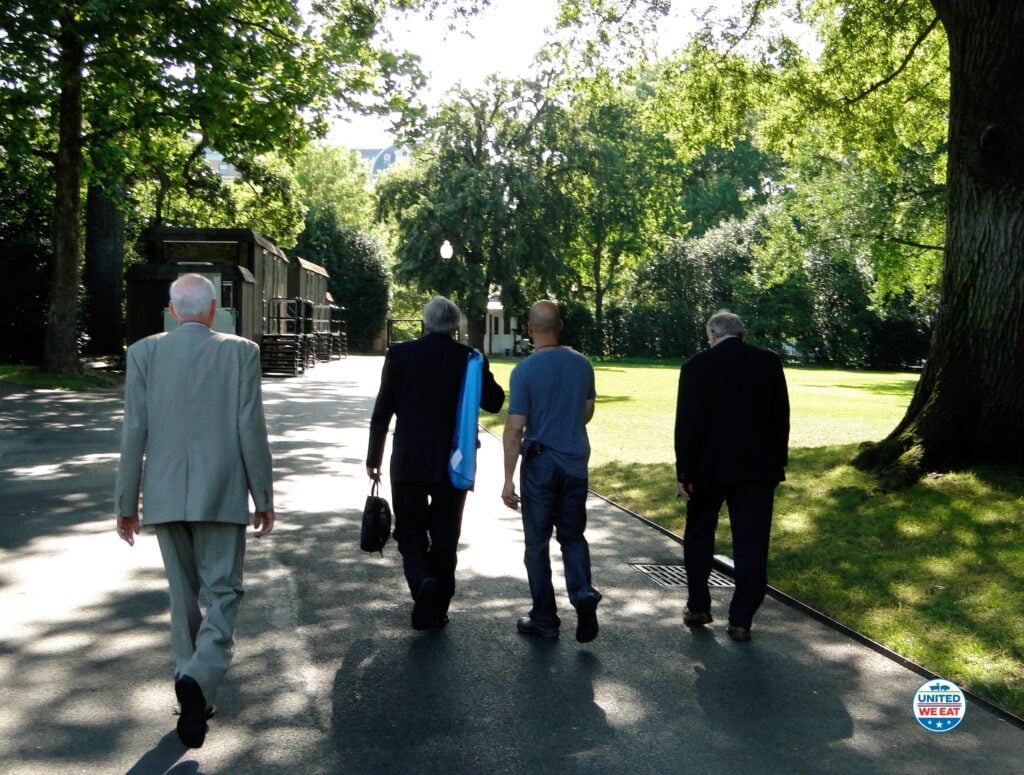
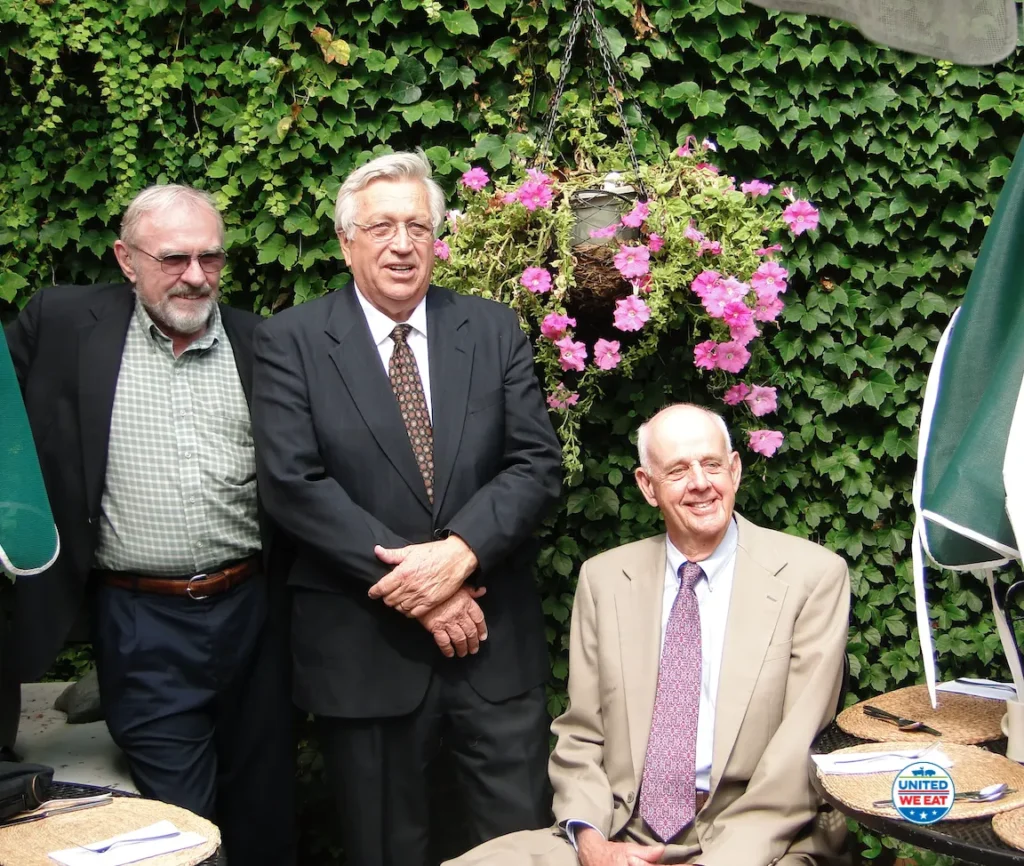
In 2009, I had the honor of bringing Wes Jackson, Fred Kirschenmann, and Wendell Berry to visit the White House garden and to meet with members of Congress and senior officials at the USDA. Together we pitched “The 50-Year Farm Bill,” making the case for putting soil health, seed protection, and environmental stewardship front and center in our nation’s food and farming systems.
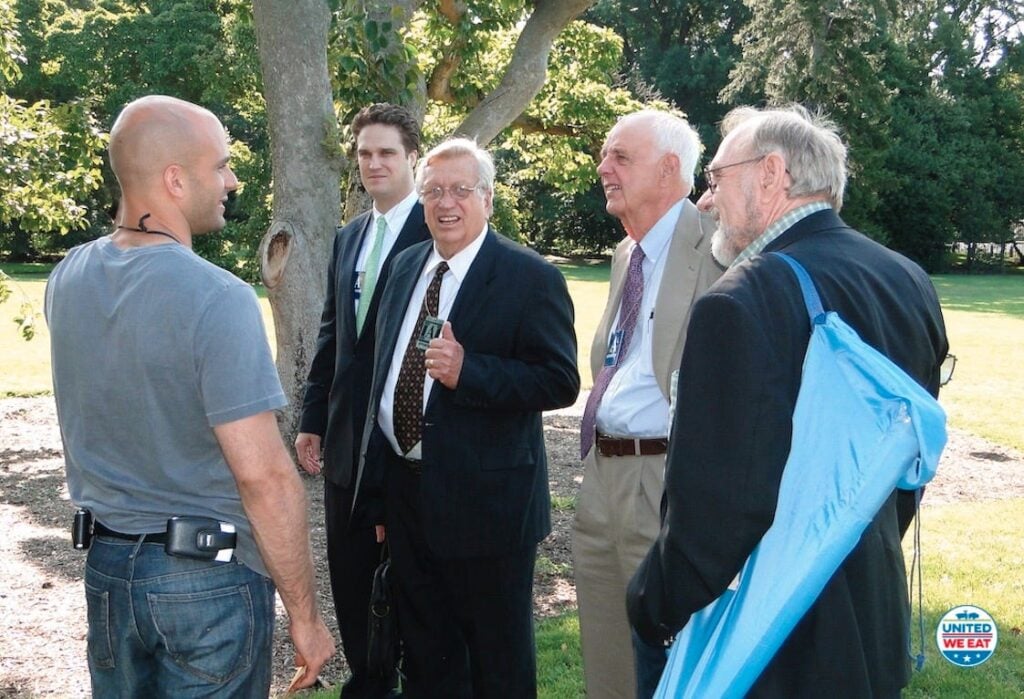
In the November 13, 2012 issue of The Atlantic Monthly, Wendell shared his and Wes and Fred’s vision with a wider audience, where he wrote about “The 50-Year Farm Bill,”detailing “American agriculture’s land ‘emergency,’ and how to solve it.”
“The uplands of my home country in north central Kentucky are sloping and easily eroded, dependent for safekeeping upon year-round cover of perennial plants. Their best agricultural use is for the production of grazing animals, with most of the land in pastures and hayfields, and perhaps 5 to 10 percent plowed and row-cropped in any year. This was the practice of the best farmers of that country 50 or 60 years ago.
The land husbandry there, as elsewhere, has been in decline since the end of World War II, as agriculture has become more and more industrial, and more and more of the farming people have taken urban jobs or moved away.
But recently and almost suddenly, as ethanol production has driven up the price of grain, our fragile uplands have been invaded by corn and soybeans. Whole farms, with sloping fields that have been in grass as long as I can remember, have been herbicided and planted to annual crops that, because of the drastic reduction of the number of farmers, will not be protected in winter by full-sown cover crops.
This is agriculture determined entirely by the market, and limited only by the capacities of machines and chemicals. The entirely predictable ruination of land and people is the result of degenerate science and the collapse of local farming cultures…”
Old Friends Enjoy the White House Garden After 50 Years of Good Writing and Hard Thinking About the Ills of Modern Agriculture
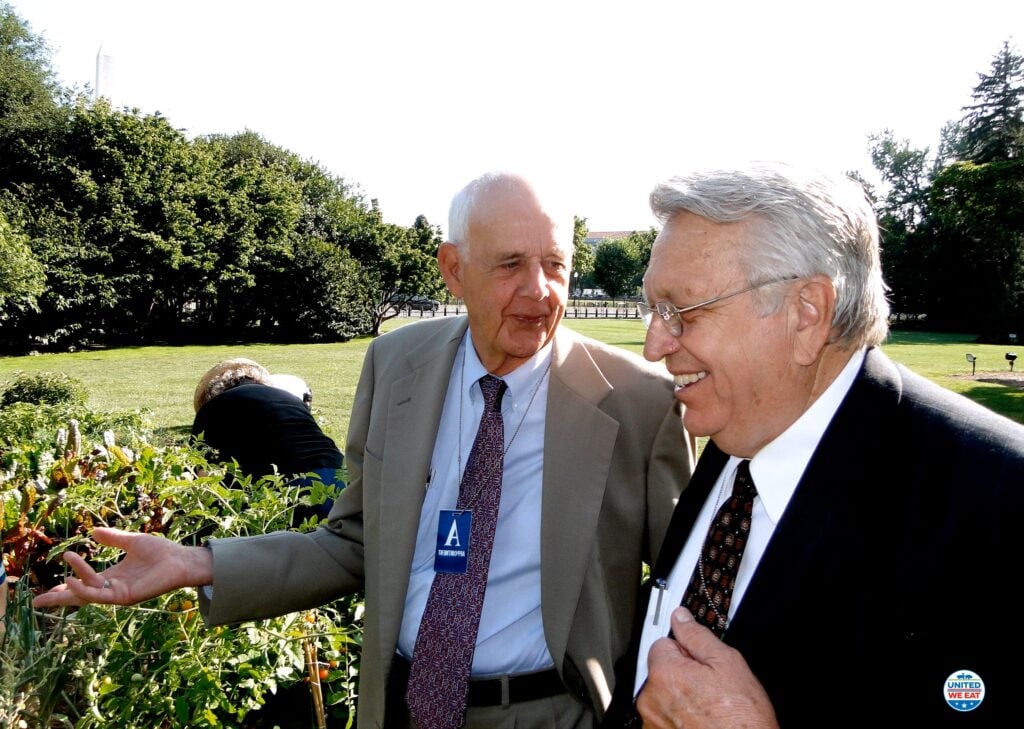
In the 14 years since these words first appeared in print, the problems in rural America and across our nation’s farms have only gotten worse. And like Moses, Wendell did not live long enough to see the promised land, but his words and his vision have helped light the way.
In another attempt to educate an urban audience hell-bent on forcing technological solutions on every aspect of our lives, Wendell spoke at the Future of Food Conference, held at Georgetown University on May 4th, 2011, imploring his audience to understand the true calling of our time — that our fate is tied to the land and how we treat it and not the endless and dizzying variables of the stock market.
The future of food is not distinguishable from the future of the land, which is indistinguishable, in turn, from the future of human care. It depends ultimately on the health not of the financial system, but of the ecosphere. In the interest of that health, we will have to bring all the disciplines, all the arts and sciences, into conformity with the nature of places. — Wendell Berry, The Future of Food…
The Obama administration failed to heed Wendell and Wes’s call for long-term thinking, as did the Biden administration, and now the Trump administration is only increasing these problems for America’s farmers and our nation’s long-term prosperity.
Farmer bankruptcies are climbing sharply, with Iowa filings up over 220% between 2024 and 2025 — and that number is expected to keep climbing in 2026 and beyond.
These farms are going out of business, not because they listened to Wendell Berry and his friends Fred Kirschenmann and Wes Jackson. Quite the opposite, because they’ve listened to the corporate propaganda and fake science of the USDA, our land-grant universities, and the agribusiness lobby hacks that would feed you and your children pink slime and foreign beef, while demanding that you be silent and happy about it.
Now it’s time for a new generation to pick up the torch, inspired by the words and wisdom that Wendell Berry put down in print to help light the way!
They say the good die young, but prophets live forever. Rest in Peace, Wendell!